C5
all holes covered
Great bass recorder · Baroque fingering
The great bass recorder is a C instrument — the same fingerings as the tenor, an octave lower. Tap a note to see which holes to cover and hear the pitch. Every note from low C upward.
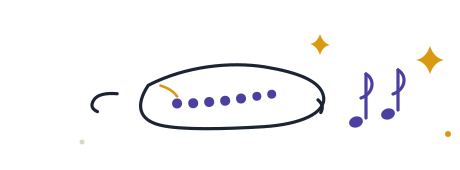
First octave — gentle, steady breath
Second octave — open, then pinch the thumb
Top register — advanced
The great bass is a C instrument, an octave below the tenor, so every fingering here is identical to the tenor chart and to the soprano pattern it comes from. We transcribed those patterns from the American Recorder Society's published soprano chart and checked them note-by-note against the Yamaha Musical Instrument Guide; the two sources agree. The diagrams were redrawn by us from scratch, not scanned from a printed chart.
The chart is maintained by SKY AND WIND. If something looks wrong, use the report a fingering link under any note — we will verify it and update the chart when it is wrong.
Take it to the music room
Every fingering above on a single sheet. Print it, or download the PDF and keep it in your case.
Reading the diagram
The great bass recorder is a C instrument, so the fingering is exactly the tenor's — and the soprano's before that. Seven holes down the front and one thumb hole on the back; the left hand covers the thumb hole and holes 1–3, the right hand covers holes 4–7. If you are new to reading these diagrams, the how-to-read guide on the soprano page applies unchanged.
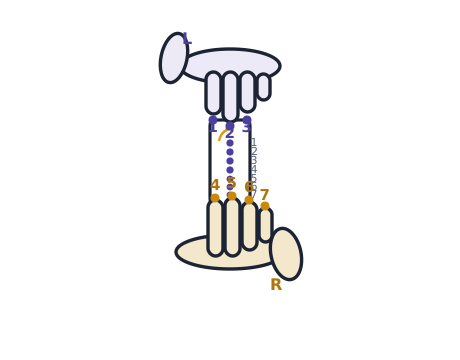
At this size the body is usually too long to hold freely — most great basses rest on a floor peg or a stand, and the lowest holes are almost always operated by keys rather than bare fingers. None of that changes a single fingering; a keyed hole is still the same hole in the chart, just moved under a lever.
The great bass wants a deep, unhurried breath and very little pressure. Pushing harder only cracks the low notes; a slow, warm column of air is what makes them speak.
The great bass sounds an octave below the tenor, which itself sounds as written. This chart uses written note names, so a part marked for great bass shows the note you finger, not the pitch you hear.
Every finger pattern is identical to the tenor. The stretch is a little wider than a tenor's but not dramatically so — most of the adjustment is the extra air and the keywork, not the hand shape.
The great bass anchors the low end of a full recorder orchestra, under the bass and alongside the contrabass. It is a specialist, ensemble-only instrument — very few players own one, and almost none start on it.
Naming and fingering systems
The name "great bass" is used two ways, and both show up in shops and old catalogues. Today it almost always means the C instrument on this page, an octave below the tenor. Historically (Praetorius's Großbaß) the same name was given to the larger F instrument an octave below the ordinary bass — the size modern makers call the contrabass. If a listing's "great bass" descends to low F rather than low C, it is what this site would call a contrabass.
Fingering systems work the same way as every other size: look for the letter stamped near the thumb hole — B for Baroque (English), G for German. Nearly all instruments and method books are Baroque, and the chart on this page is Baroque. For the full Baroque vs German comparison, see the soprano page.
Common questions
Yes, exactly. Both are C instruments, so every fingering on this chart is the same pattern you use on a tenor or soprano — the great bass just sounds two octaves below the soprano.
No, though the names get mixed up. On this site (and in most current usage), the great bass is the C instrument above, an octave below the tenor. The contrabass is a separate, larger F instrument, an octave below the ordinary bass. Praetorius originally used "great bass" for that F instrument, which is why the two names still get crossed.
Length, not weight. At this size the instrument is too long to support with the hands alone while keeping a relaxed embouchure, so a floor peg or a stand carries the weight and lets the fingers move freely.
Effectively yes for the lowest holes — they sit well out of finger reach on an instrument this size. The keys operate the same holes shown in this chart; nothing about the fingering changes.
Sealing holes, squeaks, cleaning and the high notes are the same subject on every recorder size — those answers live in the soprano page FAQ.
Corrections
Tell us and we will check it. Every fingering on this page is the soprano pattern — transcribed from the American Recorder Society's published chart and checked note-by-note against the Yamaha Musical Instrument Guide. Transcription is done by humans and humans miss things.
Email hello@recorder-chart.com — or use the link under any note on the chart, which fills in the note name for you. We will verify your report against the published charts and update the page if it turns out to be wrong.
Sources: American Recorder Society, Fingering Chart for Soprano (or Tenor) Recorder, Baroque (English) Fingering, checked note-by-note against the Yamaha Musical Instrument Guide soprano recorder (Baroque) fingering chart. Diagrams on this page are drawn from scratch and are not reproductions.